


Bestseller
Roast: Medium-dark
Our coffee
Coffees roasted lighter for filter, so you taste more of the farm. Flavors range from fruity and floral to caramel and nuts, always with a clean, sweet finish. Made for V60, Chemex, AeroPress and batch brew.
Our filter range is made up of microlots from single farms in Brazil. Maragogipe Southern Boundaries is a rare elephant bean with jammy blackcurrant, jabuticaba and tamarind. Fazenda Sertão Reserva comes from Red Bourbon trees over 100 years old, with red fruits and a spicy finish. Funky Jumper is a semi-anaerobic Red Catuaí with a fruity, brown rum character, and Sítio Matuto gives caramel, apricot and a fresh herbal note. Our Swiss Water decaf works well in filter too.
A good place to start: water at 92 to 93°C and a ratio of 1:15 to 1:16, so 15 to 16 grams of water for every gram of coffee.
Whole beans or ground? You choose per coffee, ground for your brew method.

 Roast: Medium-light

 Roast: Medium

 Roast: Medium
Value pack
Paulista Blend 4 x 1 kg for €28.13 per kilo. You save 25%.

 Roast: Medium-light
Filter coffee shows a different side of Brazil. We roast these coffees lighter, so you taste more of the farm: fruit, sweetness and a clean finish instead of only chocolate and nuts. They are made for slow brewing methods such as V60, Chemex, AeroPress, Kalita and the filter machine at home or in the office.
Many people expect Brazilian coffee to taste only of chocolate. Our filter coffees prove otherwise. Maragogipe Southern Boundaries brings blackcurrant, jabuticaba and tamarind. Funky Jumper Banger is a semi-anaerobic microlot with fruity, rum-like notes. Fazenda Sertão 100 Years Reserva comes from Red Bourbon trees over a hundred years old, with red fruits and a gentle spice. Sítio Matuto is softer, with caramel and apricot.
Start with 15 to 16 grams of water for every gram of coffee, water at 92 to 93°C and a medium-fine grind. Our filter recipe walks you through it step by step.
The Explore Filter Special Box holds five of our filter microlots of 250 g each. Brew them one after another with the same recipe and you taste how much farm, variety and processing change the cup.

It was a quiet morning when I brewed a cup that changed everything. The bag said "passion fruit", and honestly, I rolled my eyes. But then I took a sip. And there...

Fruit-forward coffee tastes of berries, stone fruit or citrus, without any flavourings. What it is, where the fruit comes from, and which Brazilian coffees show it best.

Filter coffee is making a comeback in offices, hotels and cafés. Why more businesses switch, which brewing method suits you, and which Brazilian coffees work best as filter.
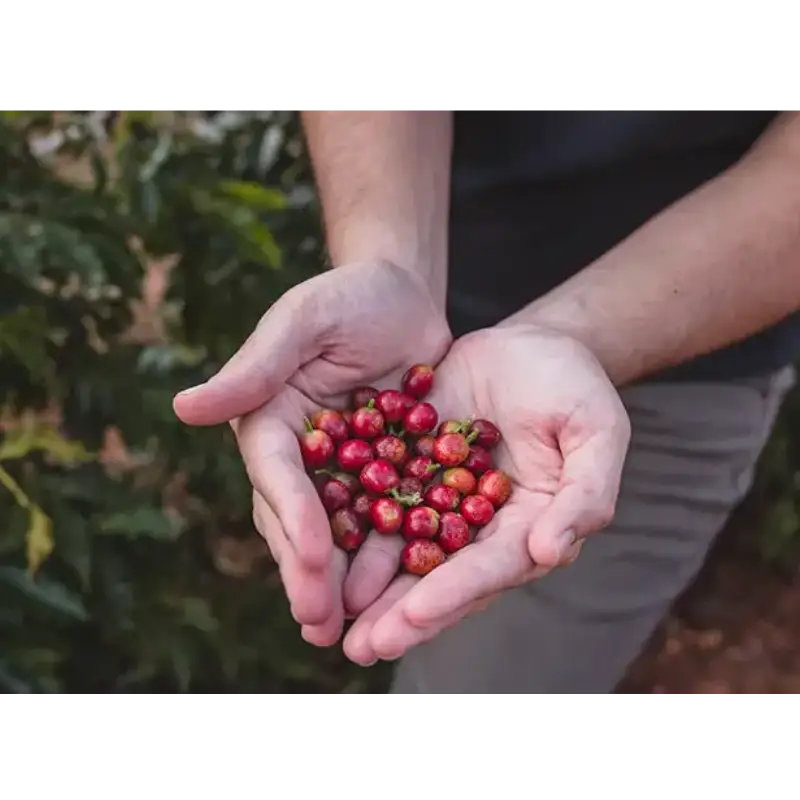
All our coffee comes straight from Brazilian producers and is roasted fresh every week in our Amsterdam roastery. That is how you taste the terroir at its best.